A complete account of how Talun identifies sources, evaluates quality, profiles ingredients, and verifies content before publication in the journal.
The editorial team identifies topic candidates from reader enquiries, tracked gaps in existing content, and developments in published nutrition and lifestyle research. Topics are logged in the editorial queue with a preliminary source count before being assigned.
Contributing writers gather a minimum of five peer-reviewed sources per article from indexed journals such as the Journal of Nutrition, the British Journal of Sports Science, and the American Journal of Applied Nutrition. Grey literature and commercial sources are excluded.
Writers produce a draft in which every factual claim is marked with an inline citation. A parallel claim map is prepared showing the source, date, study population, and limitation notes. The claim map travels with the article through all subsequent review stages.
Each article is reviewed by a qualified nutrition professional or fitness specialist. Reviewers check for claims that exceed what the cited source supports, note where uncertainty exists in the literature, and recommend adjustments to language where precision is lacking.
The editorial lead applies a final stop-word audit removing any language that constitutes an outcome claim, a recommendation beyond general nutrition guidance, or language that conflates wellness content with specialist professional instruction. Tone is adjusted to match the journal's register.
Approved articles are published with all citations visible. The complete source file, claim map, and review notes are archived internally. Articles are reviewed on a rolling 24-month basis and updated where the underlying research has developed materially.
Talun accepts three source tiers. Tier 1 sources — peer-reviewed journal articles indexed in PubMed, Cochrane, or equivalent — carry full citation weight. Tier 2 sources — institutional position papers from major nutritional or sports-science bodies — are cited with explicit acknowledgement of the source body's position. Tier 3 sources — qualified practitioner commentary — are used only for context and never as the sole support for a factual claim.
Commercial white papers, blog posts, magazine features, and brand-funded research are excluded entirely. The editorial team maintains a live exclusions log listing rejected source types with rationale, available to contributors on request.
Where a topic lacks sufficient Tier 1 sourcing, the article is either deferred until relevant research matures or published with an explicit uncertainty disclaimer noting the evidential gap. The journal does not fill gaps with inference.

Active ingredients are sourced from documented suppliers, with each batch accompanied by a certificate of composition. Sourcing prioritises suppliers whose facilities maintain food-grade processing standards. The editorial team holds the documentation chain separately from the published content and does not disclose supplier names without consent.
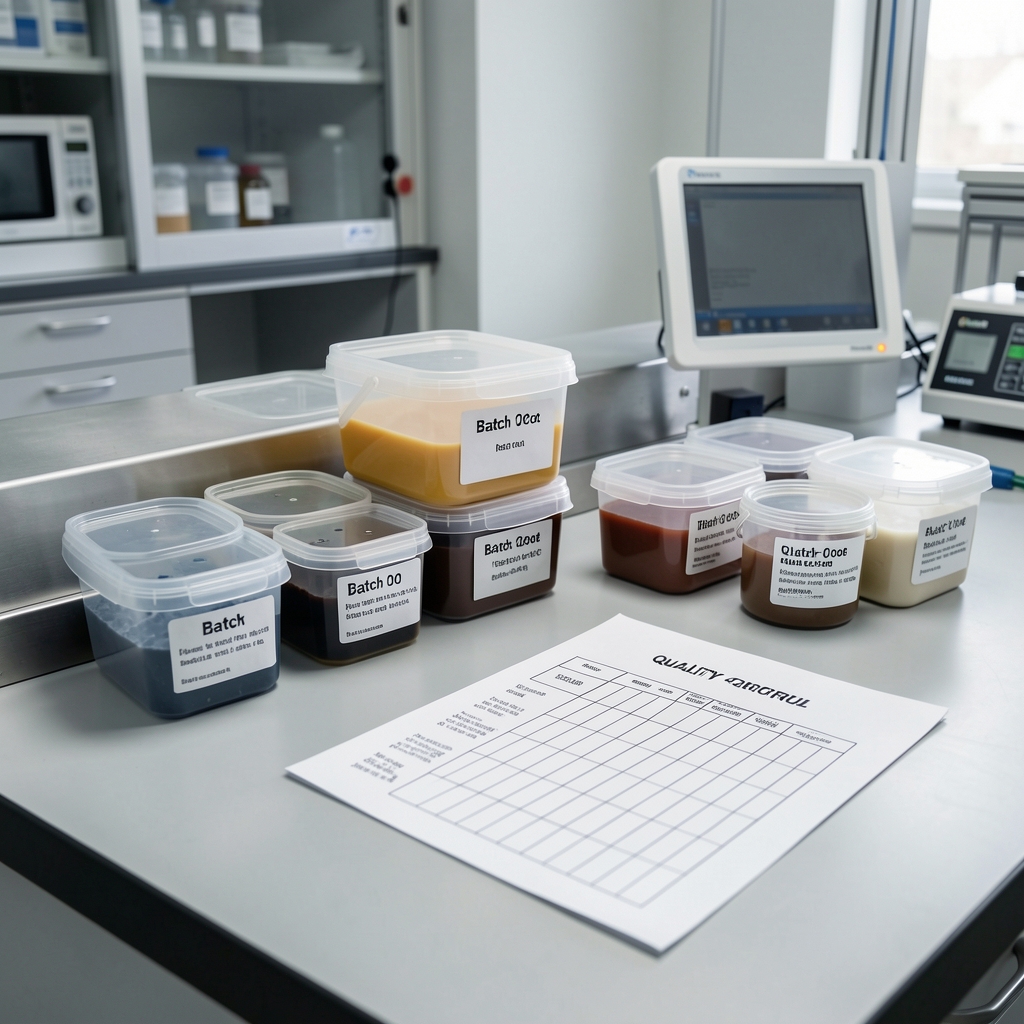
Ingredient profiles in Talun supplements are selected based on published nutritional research and undergo independent batch verification for quality and labelling accuracy. Where verification finds a discrepancy between labelling and composition, the batch is withheld from any product recommendation until resolution is documented.
Talun is an independent wellness resource focused on everyday nutrition and active lifestyle practices for men. The content is not affiliated with any governmental or institutional body.
Each batch referenced in a Talun article is accompanied by third-party composition verification. Verification documents are retained for a minimum of 36 months and are available to editorial reviewers on request.
Labelling claims are cross-checked against the verified composition certificate for each batch. Discrepancies between stated and verified composition result in immediate review and, where required, correction of published content.
Each sourced ingredient carries a full traceability record from documented supplier to published mention in the journal. The record includes supplier name, country of origin, batch number, and verification date.
Questions received from readers and contributing writers about how the editorial standards are applied in specific scenarios.
Where peer-reviewed literature produces conflicting findings on a given topic, the editorial approach is to present both positions clearly, note the nature of the conflict, and avoid drawing a conclusion that the current evidence does not support. The reader is presented with the state of the research, not a resolved verdict.
If a source used in a published Talun article is subsequently retracted, the editorial team reviews the affected content within 30 days of becoming aware. If the retracted source was a primary claim support, the article is either updated with a replacement source, amended to note the uncertainty, or withdrawn from the journal.
Yes. All contributors are required to provide evidence of relevant qualifications before their first article is published. Credentials are held on file. Contributors are listed with their verified background on each piece they contribute. Anonymised or credential-free submissions are not accepted.
Talun does not accept sponsored content in any form that requires the editorial team to reflect a brand position, omit negative findings, or prioritise a commercial relationship over source accuracy. Affiliate relationships, where present, are disclosed clearly at the article level and do not influence editorial decisions.
Peer-reviewed journals indexed in PubMed, Cochrane, or equivalent academic databases.
Five qualifying sources minimum per published article. No exceptions without explicit uncertainty disclosure.
All published articles reviewed on a rolling 24-month cycle. Retraction monitoring active on all cited sources.
Brand-funded research excluded entirely. Commercial relationships disclosed at article level where present.